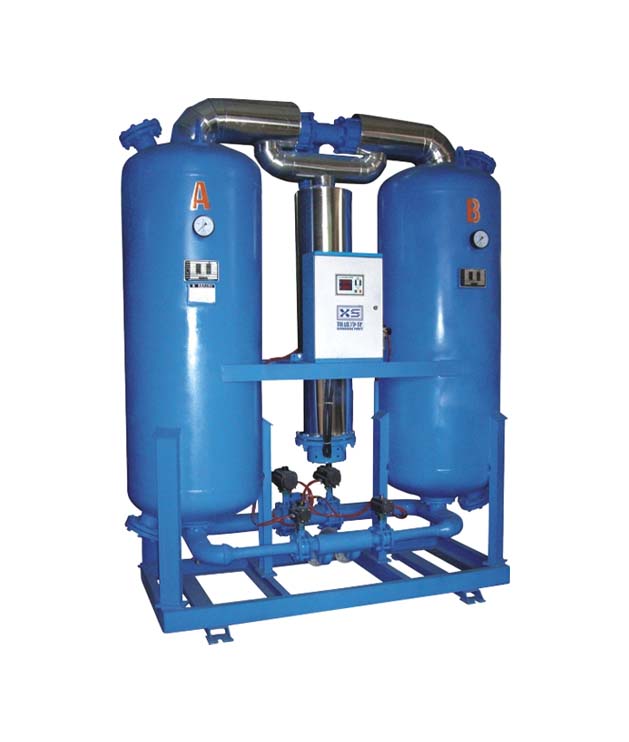
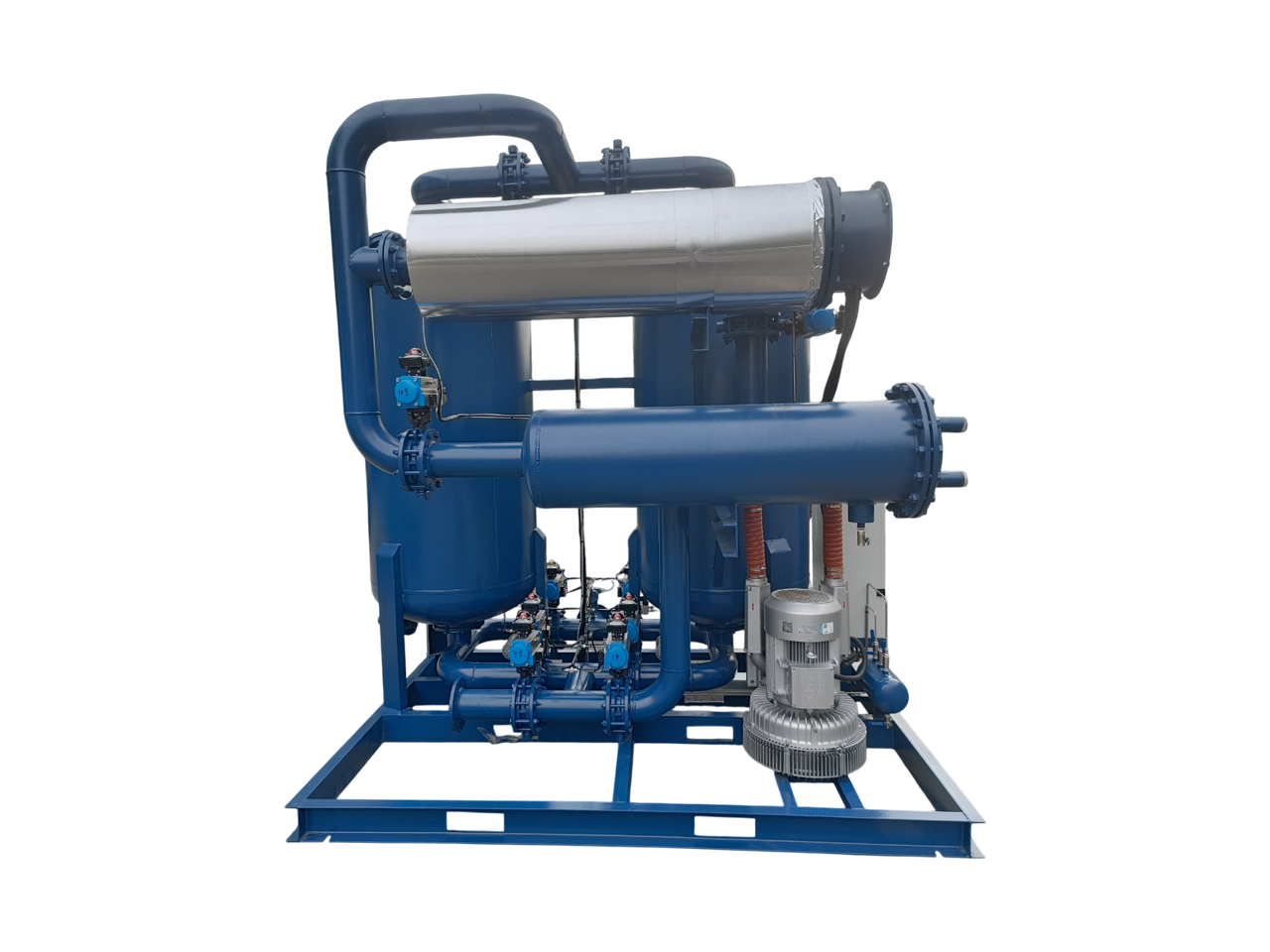
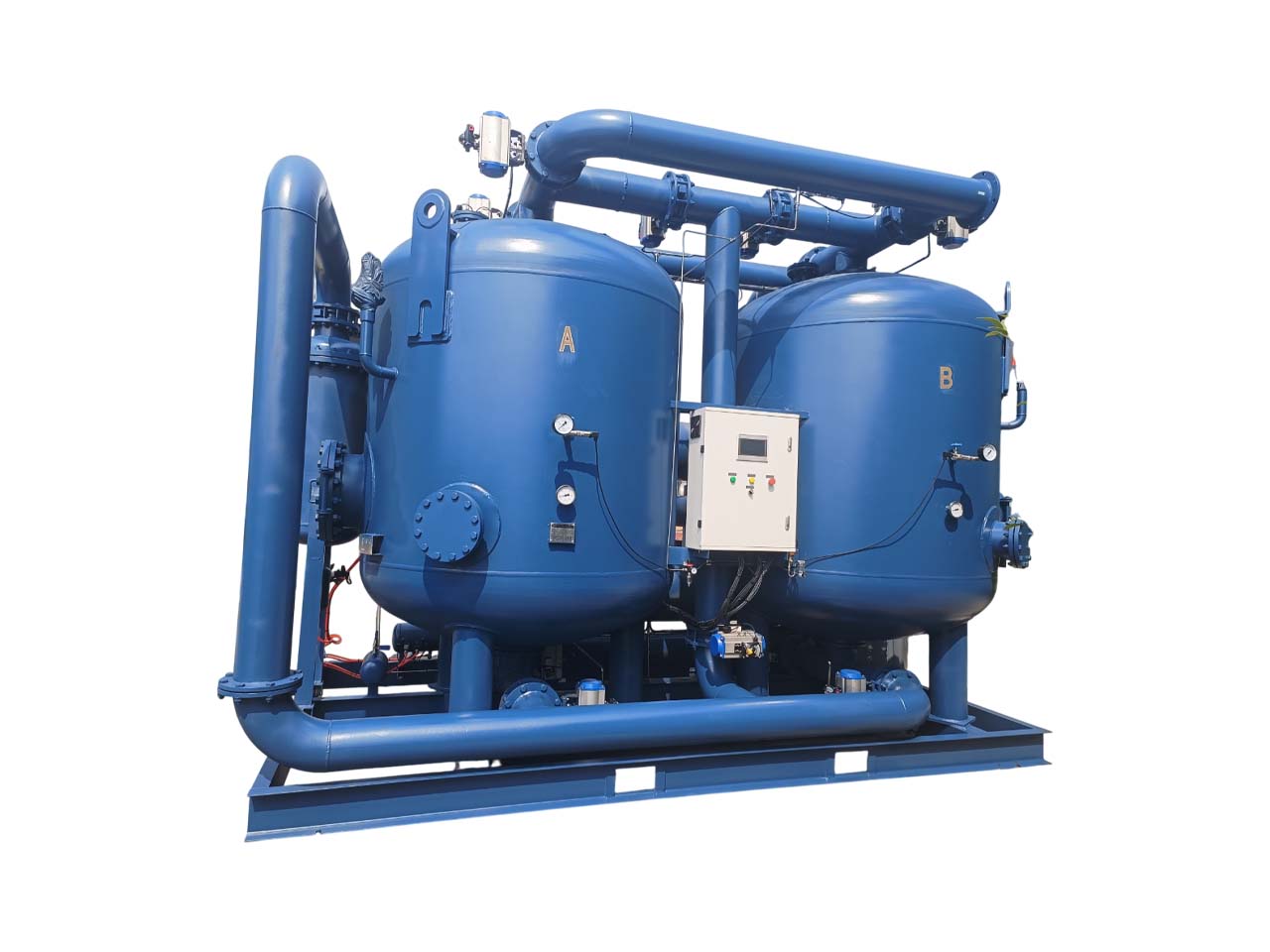
Process flow diagram
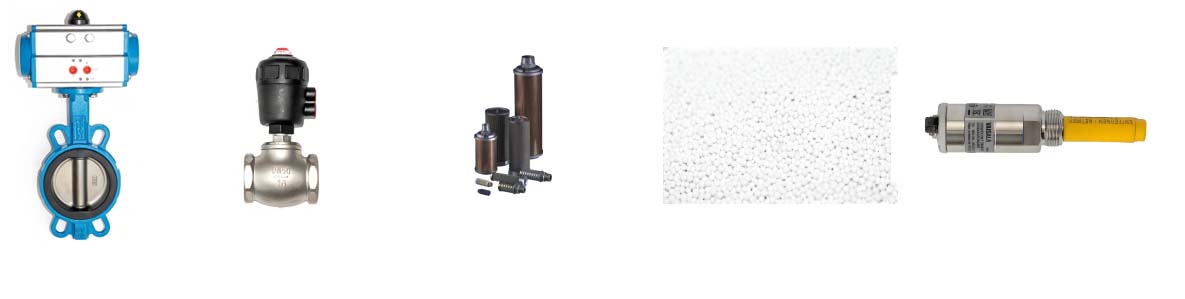
Product Features
- The new generation adsorption dryer combines the advantages of pressure swing adsorption and temperature swing adsorption. It adsorbs moisture at normal temperature and high vapor partial pressure (working phase), and desorbs it at higher temperature and low vapor partial pressure (regeneration phase). The moisture absorbed by the desiccant during adsorption is completely removed during regeneration through the combined effect of heat diffusion and low vapor pressure from high-quality regeneration air (heated and dried air).
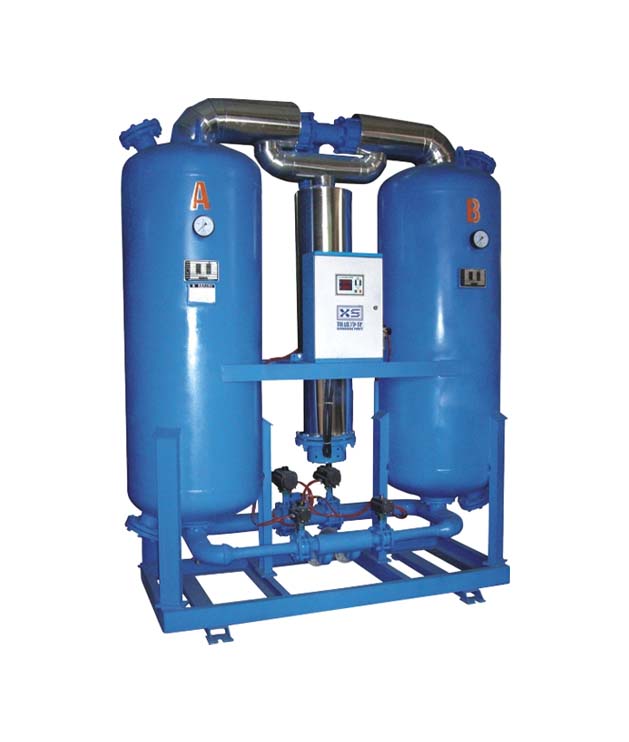
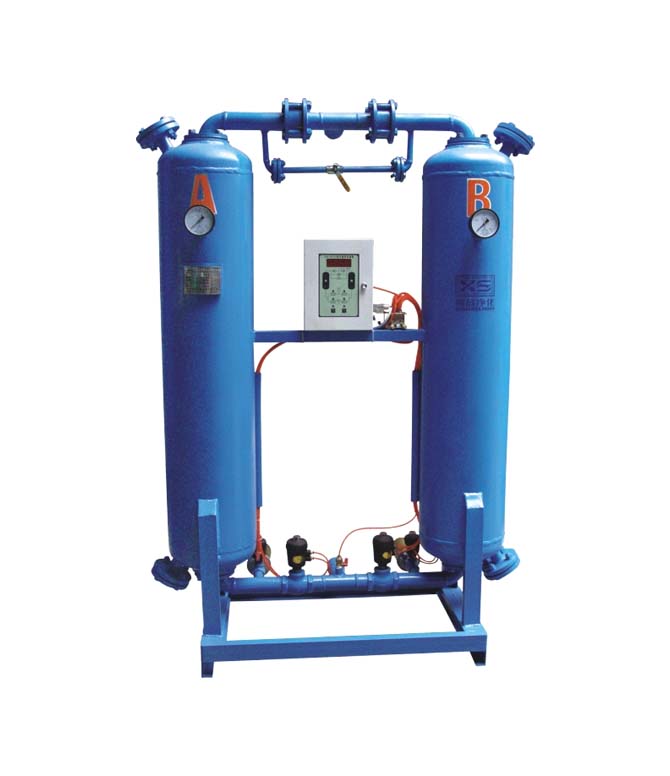
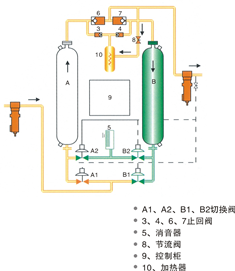
- Adsorption: Moist air enters the A drying tower through valve A1 from the lower piping system, flows upward through the desiccant bed, and the dried air is discharged through the upper piping system.
- Regeneration/Cooling: A small portion of dried air (about 7%) passes through the upper piping system and the regeneration air regulating valve, is depressurized, and then heated in the heater. This hot air (called regeneration air) enters the B drying tower to desorb and regenerate the desiccant, restoring its drying capacity. The regeneration air is discharged to the atmosphere through valve B2 and the silencer in the lower piping system.
- Pressure Equalization: After regeneration, valve B2 closes, and the B drying tower gradually increases to the online operating pressure before switching.
- Switching: Valve B1 in the lower piping system opens, valve A1 closes, valve A2 opens, and the A and B drying towers complete the switching process—tower B enters adsorption, and tower A is depressurized for regeneration. The operating sequence, timing, and heating process are automatically controlled by the controller.
Technical Parameters
- Rated Inlet Temperature: ≤45℃
- Rated Operating Pressure: 0.7 MPa (usable range: 0.4–1.0 MPa; up to 6.4 MPa available on request)
- Pressure Drop: <0.02 MPa
- Pressure Dew Point: -40℃ (at 0.7 MPa) (-70℃ and below available on request)
- Regeneration Method: Low-heat regeneration
- Control Method: Fully electronic programmable timer control or PLC control
- Working Cycle: T = 90–480 minutes (adjustable)
- Regeneration Air Consumption: Approx. 5%–7%
- Desiccant: Activated alumina (with molecular sieve)
- Inlet Air Oil Content: ≤0.1 ppm
- Heater Voltage: 220V for 1–2 m³/min models; 380V for 3 m³/min and above
- Installation: Indoor, no foundation required, leveled concrete floor
Model Specifications and Performance Parameters
| Model XS- | 1MXF | 2MXF | 3MXF | 6MXF | 8MXF | 10MXF | 12MXF | 15MXF | 20MXF | 25MXF | 30MXF | 40MXF | 50MXF | 60MXF | 80MXF | 100MXF | 120MXF | 150MXF | 200MXF | 250MXF | 300MXF | 350MXF | 400MXF |
| Nominal Volume Flow Rate (m3/min) | 1.2 | 2.6 | 3.8 | 6.8 | 8.5 | 11 | 13 | 17 | 22 | 27 | 32 | 45 | 55 | 65 | 85 | 110 | 130 | 160 | 210 | 260 | 310 | 360 | 410 |
| Piping Size | RC1″ | RC1″ | RC11/2″ | RC11/2″ | RC2″ | RC2″ | RC2″ | DN65 | DN80 | DN80 | DN80 | DN100 | DN100 | DN125 | DN125 | DN150 | DN150 | DN200 | DN200 | DN200 | DN250 | DN300 | DN300 |
| Heating Power(KW) | 0.6 | 1.2 | 2 | 3 | 4 | 4 | 4 | 6 | 9 | 9 | 12 | 15 | 18 | 21 | 28 | 36 | 42 | 54 | 72 | 90 | 110 | 130 | 150 |
| Weight(Kg) | 135 | 170 | 180 | 380 | 460 | 500 | 560 | 760 | 930 | 990 | 1380 | 1620 | 1950 | 2320 | 2880 | 4230 | 5060 | 6350 | 7400 | 9510 | 13150 | 14000 | 14800 |
| Length(mm) | 850 | 850 | 950 | 970 | 1175 | 1230 | 1320 | 1420 | 1410 | 1460 | 1660 | 1710 | 1920 | 2100 | 2270 | 2416 | 2620 | 2850 | 3266 | 3620 | 4300 | 4500 | 4900 |
| Width(mm) | 450 | 450 | 450 | 450 | 500 | 500 | 570 | 700 | 700 | 750 | 850 | 850 | 950 | 1050 | 1050 | 1150 | 1150 | 1350 | 1500 | 1780 | 2000 | 2200 | 2400 |
| Height(mm) | 1754 | 1844 | 1480 | 1920 | 1965 | 2040 | 2100 | 2250 | 2525 | 2535 | 2550 | 2650 | 2670 | 2850 | 2840 | 2800 | 2860 | 3040 | 3200 | 3290 | 3600 | 3650 | 3800 |
Note:
Optional configurations:
1. Integrated installation of pre- and post-filters on the unit.
2. Use of molecular sieve.
3. Dew point switching mode.
4. High dew point alarm, interlock, and upper-level communication interface.
5. Dual-setting interlock for heating temperature.
6. Imported dew point meter with LCD or touch screen display.
7. PLC control, compatible with various communication protocols such as RS485 I/O, Profibus, Modbus, and Ethernet.