Selecting the right compressed air dryer directly affects air quality, system reliability, and long-term operating expenses. Among the most common options, refrigerated vs desiccant air dryer comparisons are often at the center of industrial air system design discussions. Each technology removes moisture from compressed air in a different way and serves different application requirements.
This compressed air dryer comparison provides a practical air dryer selection guide to help users choose between refrigerated and desiccant dryers based on dew point range, cost, and application needs.
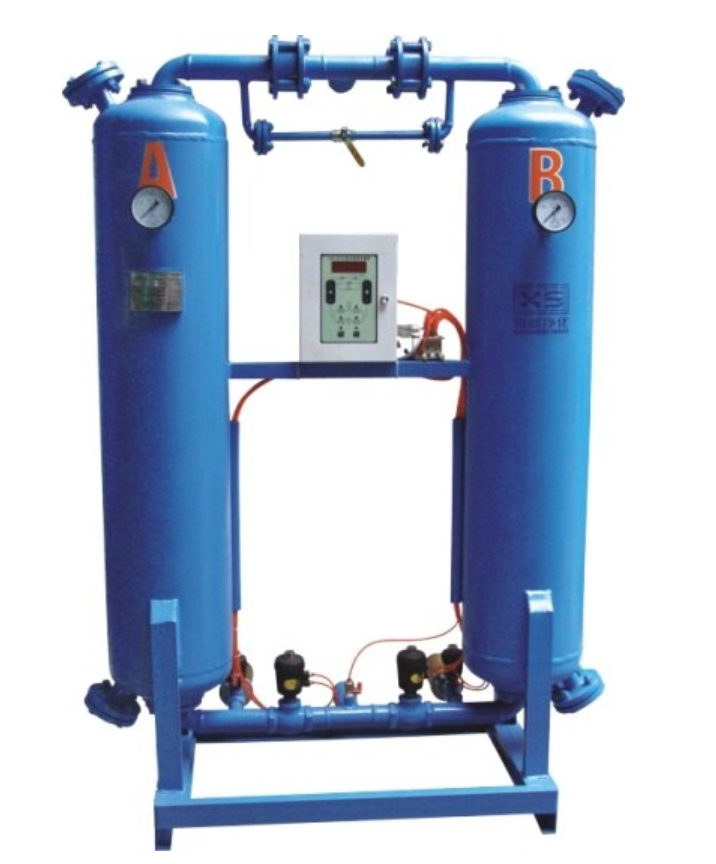
Atmospheric air naturally contains water vapor. When air is compressed, moisture content increases, leading to condensation unless controlled. Excess moisture from compressed air can result in:
Effective removing moisture from compressed air is therefore a basic requirement for delivering dry compressed air.
Understanding how refrigerated air dryers work helps clarify their position in industrial compressed air systems. Refrigerated dryers cool compressed air using a heat exchanger, causing water vapor to condense and separate from the air stream.
Key features include:
Refrigerated dryers are often chosen as a cost effective solution where ultra-low dew points are not required.
Desiccant dryers remove moisture by adsorption rather than cooling. They use materials such as desiccant beads, including activated alumina, to trap moisture from the air.
Typical characteristics:
Desiccant dryers are commonly used where compressed air must remain dry even in very cold or controlled environments.
Understanding the dew point required is the first step in choosing the right air dryer.
If the application requires air that remains dry below freezing temperatures or in highly sensitive processes, desiccant dryers are often selected. For most standard industrial environments, refrigerated dryers offer sufficient moisture control.
From a total cost perspective, refrigerated dryers are generally more economical for standard industrial use.
| Application Requirement | Refrigerated Air Dryer | Desiccant Air Dryer |
|---|---|---|
| Moderate dry air needs | ✔ Suitable | ✔ Suitable |
| Ultra dry air required | ✖ Not suitable | ✔ Ideal |
| Low operating cost focus | ✔ Preferred | ✖ Higher cost |
| Cold environment use | ✖ Limited | ✔ Suitable |
| General industrial use | ✔ Widely used | ✔ Limited use |
| Energy-efficient solution | ✔ Yes | ✖ Less efficient |
This table supports quick selection and is structured for Featured Snippet visibility.
When choosing the right air dryer, consider:
Dryers are ideal only when matched correctly to system requirements. Overspecifying drying performance often increases cost without delivering practical benefits.
For facilities prioritizing energy efficient compressed air systems, refrigerated dryers are usually favored due to:
Desiccant dryers, while effective in producing ultra dry air, generally consume more energy and incur higher operating costs.
Refrigerated dryers remove moisture by cooling the air, while desiccant dryers remove moisture through adsorption using desiccant materials.
Desiccant air dryers provide ultra dry air with very low dew points.
They are suitable for most industrial applications that do not require extremely low dew points.
Yes. Many desiccant systems use purge air or external energy for regeneration.
Refrigerated air dryers generally have lower operating and maintenance costs in standard environments.
Both refrigerated and desiccant air dryers offer effective ways to remove moisture from compressed air, but they serve different operational needs. Refrigerated dryers provide a cost effective and energy-efficient solution for most industrial applications requiring moderate dry air. Desiccant dryers are selected when ultra dry air and very low dew points are required. By evaluating dew point requirements, operating cost, and application conditions, users can select the most suitable compressed air drying technology for long-term performance and reliability.