Industrial facilities rely on compressed air to power equipment, support automation, and maintain stable production processes. However, managing energy consumption and operational costs remains a priority for plant operators. Moisture in compressed air systems reduces performance and increases maintenance needs, making effective drying essential.
An energy efficient refrigerated air dryer provides a cost effective solution for delivering dry air while helping manufacturers achieve energy savings and long-term cost control.
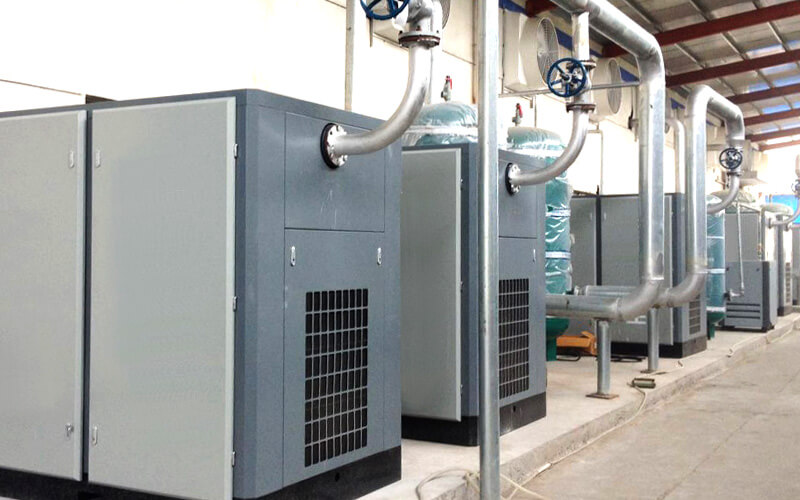
When air is compressed, cooling the compressed air causes water vapor to condense. Without proper drying, moisture remains in the air stream and spreads through the system.
Problems associated with moisture include:
An industrial compressed air dryer is designed to remove moisture before it affects downstream applications.
Refrigerated compressed air dryers operate by lowering air temperature through heat exchange, allowing moisture to condense and be separated.
The basic process includes:
This method delivers stable dew point performance suitable for most industrial applications.
Modern air dryers featuring VSD control adjust refrigeration output based on actual air demand. When compressed air flow decreases, energy use is reduced accordingly.
Benefits include:
Efficient heat exchange improves moisture removal while minimizing power input. Advanced heat exchanger designs maximize thermal transfer, ensuring stable drying performance with lower energy use.
This contributes directly to reducing operating costs in industrial compressed air systems.
For facilities seeking energy savings and predictable costs, refrigerated dryers offer a balanced approach compared to desiccant dryers.
Evaluating operational costs helps determine the most cost effective solution.
Key factors include:
Example:
If a refrigerated dryer operates at 5 kW for 6,000 hours annually, total energy consumption is 30,000 kWh. Multiplying by local electricity rates provides an estimate of annual energy cost.
This approach helps identify opportunities for reducing operating costs through energy-efficient equipment selection.
Industrial users choose refrigerated air dryers because:
These advantages make them suitable across a wide range of industrial compressed air applications.
When choosing a low energy air dryer, consider:
Correct sizing ensures efficient operation without unnecessary energy use.
Energy efficiency comes from features like VSD control, efficient heat exchangers, and stable operation without purge air losses.
Savings depend on operating conditions, but refrigerated dryers typically use significantly less energy in standard industrial environments.
They usually deliver a pressure dew point around +3°C, suitable for most indoor industrial applications.
Yes. They are designed for continuous use with stable performance and minimal maintenance.
Yes. By lowering energy consumption and maintenance needs, they contribute to long-term cost reduction.
Energy-efficient refrigerated air dryers provide industrial compressed air systems with a reliable and economical way to remove moisture while maintaining optimal air quality. Through features such as VSD control, efficient heat exchange, and predictable energy use, these dryers support energy savings and reduced operational costs. For a wide range of industrial applications, refrigerated compressed air dryers remain a practical solution for delivering dry air with long-term efficiency and minimal maintenance.