Metal fabrication and welding shops rely heavily on compressed air systems for cutting, welding, coating, and operating pneumatic tools. When moisture enters the air supply, it can reduce product quality, damage equipment, and interrupt production. This guide explains how refrigerated air dryers support clean, moisture-free air for metalworking environments, with practical insights on dew points, air quality, and typical system configurations.
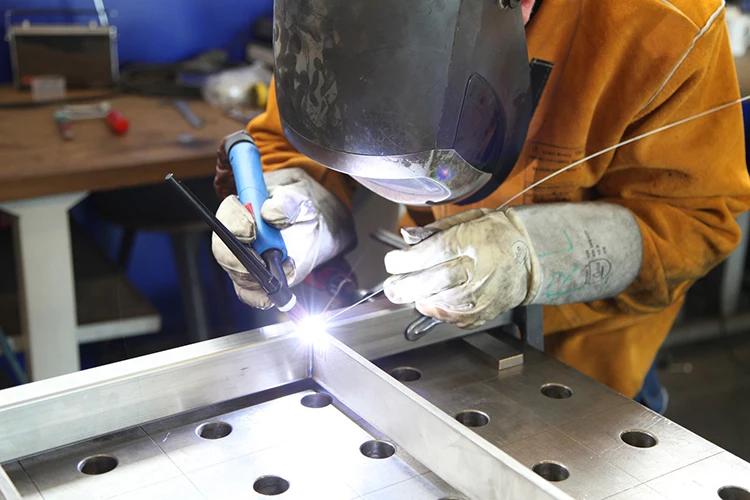
Compressed air always contains water vapor from the surrounding environment. As air is compressed by an air compressor, this vapor condenses into liquid water when the air cools inside pipes and machines.
In metal fabrication, excess moisture can cause:
Using compressed air dryers to remove moisture ensures clean dry air reaches every point of use.
For plasma cutting and laser-assisted processes, dry compressed air improves:
An air dryer for plasma cutting helps maintain consistent airflow and reduces the risk of nozzle and electrode wear.
In compressed air for welding, moisture-free air avoids:
This is especially important in automated and robotic welding lines.
The dew point is the temperature at which moisture condenses out of compressed air.
The pressure dew point refers to this value measured under system pressure, making it the standard reference for industrial air quality.
| Application | Recommended Pressure Dew Point |
|---|---|
| General pneumatic tools | +3°C to +5°C |
| Painting & coating | +3°C or lower |
| Plasma cutting | +3°C |
| Welding air supply | +3°C |
| Outdoor pipelines | 0°C or lower |
Refrigerated air dryers commonly deliver a stable pressure dew point around +3°C, suitable for most metal fabrication shops.
Refrigerated air dryers work by cooling the compressed air, causing water vapor to condense and separate before the air reaches the tools or machines.
This method offers reliable moisture removal with moderate energy use, making it suitable for a wide range of industrial applications.
Metal fabrication shops often operate in demanding conditions. Heavy duty refrigerated air dryers provide consistent air quality for continuous or multi-shift production.
By delivering moisture-free air, these dryers help prevent:
This extends the service life of your compressed air system.
Compared to desiccant dryers, refrigerated air dryers usually:
For most fabrication environments, they provide a balanced solution between performance and cost.
A standard refrigerated air dryer metal fabrication setup often includes:
Air Compressor ↓Aftercooler ↓Refrigerated Air Dryer ↓Coalescing Filter ↓Compressed Air System ↓Pneumatic Tools / Welding / Plasma CuttingThis configuration supports stable air quality for painting coating, cutting, and welding processes.
| Feature | Refrigerated Air Dryers | Desiccant Dryers |
|---|---|---|
| Typical Dew Point | +3°C | -20°C to -40°C |
| Energy Use | Moderate | Higher |
| Maintenance | Low | Higher |
| Suitable for Metal Fabrication | Yes | Only for ultra-dry needs |
| Cost | Lower | Higher |
Unless your process demands ultra-dry air, refrigerated dryers remain the preferred option for most metalworking environments.
Most shops require dry compressed air with a pressure dew point around +3°C and low oil and particle content to protect tools and processes.
Yes. Heavy duty models are designed for continuous operation and large airflows common in fabrication and welding facilities.
Yes. When combined with proper filtration, they supply clean dry air suitable for painting coating operations.
They remove moisture that causes corrosion, sticking valves, and pressure drops, improving tool reliability and service life.
If your application requires dew points below 0°C (such as outdoor winter pipelines or moisture-sensitive electronics), desiccant dryers may be needed.
When choosing an air dryer for plasma cutting, welding, or general metalworking, consider:
A correctly sized refrigerated air dryer ensures consistent air quality while supporting efficient production.
For metal fabrication and welding shops, moisture control directly influences cutting precision, weld quality, equipment lifespan, and operating stability. Refrigerated air dryers offer a practical and cost-efficient way to deliver clean dry air across a wide range of applications—from pneumatic tools to plasma cutting and compressed air for welding.
By selecting the right configuration and maintaining stable dew points, manufacturers can protect their compressed air system, improve production outcomes, and reduce unplanned downtime.