An adsorption air dryer, also known as a desiccant air dryer, is a type of air dryer used in compressed air systems to achieve extremely low dew points—often as low as −40°C or even −70°C. Unlike refrigerated dryers that cool the air to remove moisture, adsorption dryers use desiccant material to adsorb water vapor directly from compressed air. This makes them ideal for industries requiring very dry compressed air, high air quality, and consistent product quality even in harsh conditions.
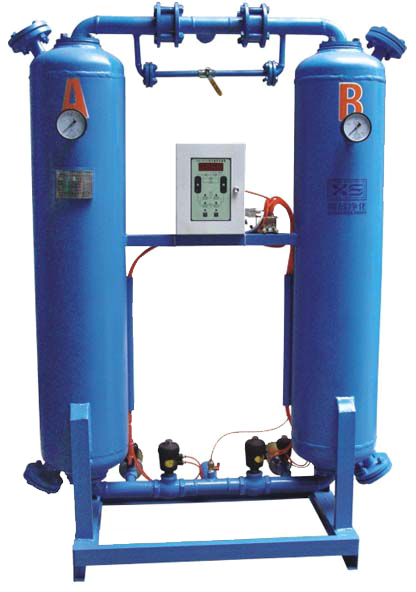
When compressed air from the air compressor enters an adsorption dryer, it passes through a tower filled with desiccant material such as activated alumina, molecular sieve, or silica gel.
These desiccants adsorb water vapor from the air, significantly reducing moisture levels and lowering the dew point.
Most desiccant dryers operate with two towers:
After a certain period, the towers switch roles. This continuous cycle ensures a constant supply of dry compressed air to the system.
To continue effective operation, the system must regenerate the desiccant. Depending on the dryer type, regeneration may use:
Advanced designs minimize operating costs, optimize flow rates, and maintain stable dew points with improved energy efficiency.
Adsorption dryers are critical when:
Compared with refrigerated dryers, adsorption dryers are preferred for demanding industrial environments.
Different types of desiccants provide different performance benefits:
The selection depends on flow rates, dew point targets, system pressure, and required energy efficiency.
Ideal for industries that cannot tolerate moisture.
Modern designs reduce purge air losses and regeneration power use.
Ensures consistently dry compressed air even in humid conditions.
Reduces moisture-related defects in manufacturing and processing.
Operates effectively even with high ambient humidity or low temperatures.
Adsorption air dryers are used in:
Most desiccant dryers achieve −40°C dew point, while advanced systems can reach −70°C for ultra-dry compressed air.
Common desiccant materials include activated alumina, silica gel, and molecular sieve.
Depending on the dryer design, regeneration may use:
Older designs could be energy-intensive, but modern adsorption dryers are more energy efficient, reducing both purge loss and heater power consumption.
Choose adsorption dryers when:
Yes—adsorption technology removes almost all water vapor, providing extremely dry compressed air.
An adsorption air dryer is an essential solution for industries requiring very low dew points, high system reliability, and consistent air quality. By using desiccant material to adsorb water vapor and continuously regenerate the desiccant, adsorption dryers deliver clean, dry compressed air even in challenging environments. Whether you need stable flow rates, improved energy efficiency, or moisture-free air to protect equipment and ensure product quality, adsorption dryers remain one of the most effective moisture-control technologies in compressed air treatment.