A refrigerated compressed air dryer is one of the most widely used solutions for removing moisture from compressed air systems. In industrial and manufacturing environments, untreated compressed air contains water vapor. When the dryer cools the air to a low temperature, it forces the vapor to condense moisture, allowing the system to remove it and deliver clean, dry air to downstream equipment.
Because moisture causes corrosion, blockages, and quality issues, compressed air dryers—especially refrigerated types—are essential for ensuring reliability, product quality, and long equipment life.
This guide explains what refrigerated air dryers are, how they work, their advantages, and when they are the right choice for your facility.
A refrigerated compressed air dryer is a type of compressed air treatment device that removes moisture from compressed air systems by cooling the air to a low temperature, causing water vapor to condense moisture into liquid form. Once the dryer cools the air inside the heat exchanger, the condensed water is separated and automatically drained, leaving clean, dry air for industrial use. As one of the most widely used compressed air dryers, refrigerated models provide a reliable and energy-efficient way to prevent corrosion, equipment damage, and quality defects in general manufacturing environments.
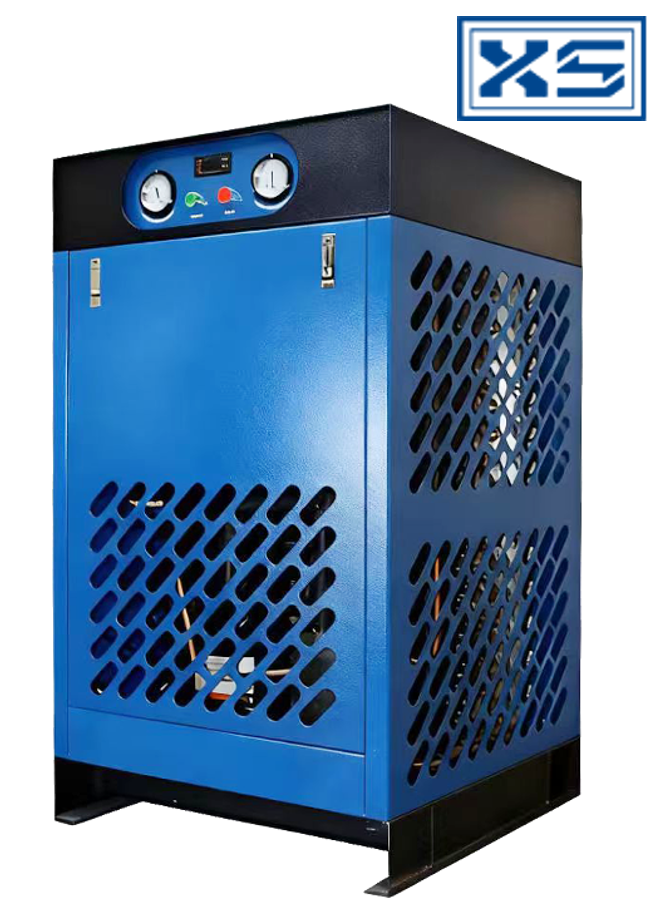
A refrigerated dryer uses a closed-loop refrigeration cycle to cool the compressed air, allowing water vapor to drop out as liquid. Below is the typical working process:
After compression, air is hot and saturated with moisture. It first enters a heat exchanger, where warm air begins to cool.
Inside the refrigeration system:
This cooling process is why the technology is called a refrigerated compressed air dryer.
When the dryer cools the air below the dew point, liquid condensate forms. An automatic drain then removes this water.
The cooled, dehumidified air passes back through the heat exchanger, warming it slightly to prevent downstream piping from sweating.
The result is moisture-free, dry air ready for general industrial applications.
These save energy by adjusting refrigeration activity based on load.
The most energy-efficient design.
A variable speed compressor modulates according to moisture load, reducing power consumption significantly.
More affordable compared to desiccant or membrane dryers.
Delivers clean dry air at pressure dew points of 2–10°C.
Simple design, widely compatible with industrial equipment.
Modern technologies reduce energy waste and operational cost.
Refrigerated air dryers are the preferred choice in applications where dew point requirements are moderate:
They provide reliable, cost-effective moisture protection across thousands of industrial facilities.
| Dryer Type | Typical Dew Point | Best For |
|---|---|---|
| Refrigerated Air Dryer | 2–10°C | General industry |
| Adsorption / Desiccant Air Dryer | –40°C to –70°C | Critical or low-dew-point applications |
| Membrane Dryer | –20°C | Low flow, point-of-use drying |
Refrigerated dryers offer the best balance of performance and cost for most compressor rooms.
It cools compressed air, forcing water vapor to condense so the system can remove it, producing dry air.
When the dryer cools the air in the heat exchanger, water vapor condenses into liquid water, which is drained automatically.
Yes—if your application requires clean, moisture-free air but does not need extremely low dew points (like –40°C). It prevents corrosion, contamination, and equipment failures.
A variable speed system adjusts cooling capacity based on load, significantly reducing energy consumption and operating cost.
Typically 8–15 years with proper maintenance—longer in clean, well-ventilated environments.
Choose a dryer with:
A professional supplier can calculate this based on your system load.
A refrigerated compressed air dryer is one of the most reliable and cost-effective technologies for producing clean, dry compressed air in industrial environments. By lowering the air temperature so the dryer cools the moisture and forces it to condense, it protects your equipment from corrosion, blockages, quality defects, and unexpected downtime. With options such as cycling and variable speed designs, modern refrigerated air dryers deliver high energy efficiency and stable dew points for a wide range of compressed air systems.
If your facility needs a dependable way to remove moisture while maintaining simplicity and low operating cost, a refrigerated air dryer remains the best all-round solution. For help selecting the right capacity, configuration, or heat exchanger design, you can always consult a professional supplier to ensure optimal performance for your application.