Automotive assembly plants rely heavily on compressed air across painting, assembly, inspection, and material handling operations. From robotic spray booths to pneumatic tools on the production line, maintaining dry compressed air is essential for stable operation and consistent product quality. Moisture and water vapor present in compressed air systems can lead to corrosion, surface defects, and unplanned maintenance.
For this reason, refrigerated compressed air dryers are widely used in compressed air system automotive plant setups to remove moisture from compressed air efficiently and support continuous production.
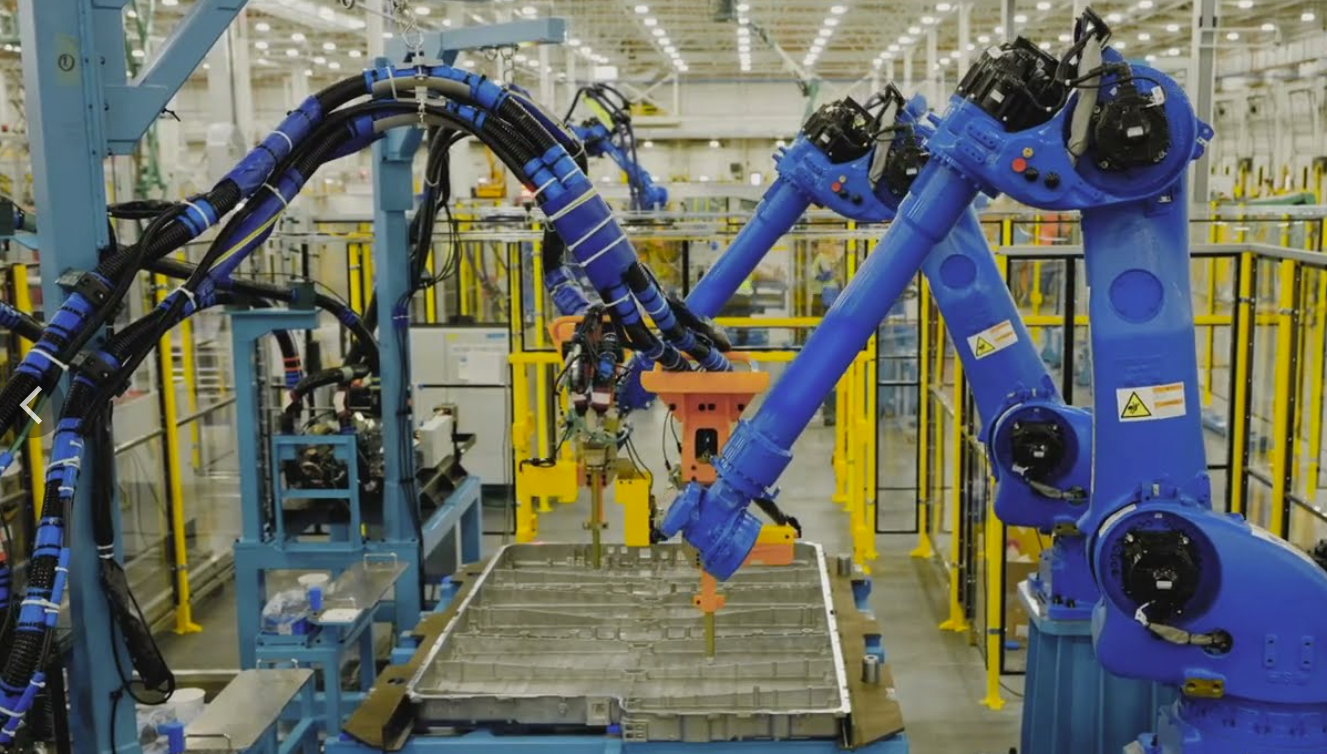
Compressed air usage varies across different stages of vehicle production, each with distinct air quality requirements.
Painting lines require high quality compressed air to prevent defects such as fisheyes, blistering, and uneven coating. Moisture or oil contamination can directly affect paint finish.
On the assembly line, compressed air powers a wide range of pneumatic tools, cylinders, and actuators. Stable air supply ensures repeatable torque control and smooth mechanical motion.
Leak testing, functional checks, and sensor operation also depend on consistent air pressure and cleanliness, though air dryness requirements are generally less strict than in painting.
These differences make moisture control an important part of air system design.
When an air compressor draws in ambient air, it also compresses moisture contained in the air. During cooling the compressed air, water vapor condenses into liquid water inside the air system.
Without proper drying, moisture can accumulate in pipelines and equipment, leading to:
An effective dryer remove solution is required to prevent these issues.
Understanding how refrigerant air dryers work explains why they are widely adopted in automotive manufacturing. A refrigerated dryer removes moisture by cooling compressed air so that water vapor condenses and can be separated.
The drying process involves:
This method provides stable pressure dew points suitable for most automotive assembly applications.
Refrigerated compressed air dryers typically deliver pressure dew points around +3°C. This level of dryness prevents condensation in indoor production environments and supports reliable operation of pneumatic equipment.
Compared with desiccant dryers, refrigerated dryers offer sufficient moisture control for most automotive assembly processes without excessive energy consumption.
For the majority of automotive applications, refrigerated dryers provide an effective balance between performance and cost.
Large automotive plants often operate multiple air compressors feeding a single compressed air network. In these cases, a centralized drying system is commonly used.
Benefits of centralized refrigerated air dryer automotive solutions include:
Centralized systems are typically installed downstream of compressors and upstream of main distribution headers.
Refrigerated compressed air dryers are designed for continuous industrial operation. Compared with desiccant dryers, they:
This makes them an energy efficient choice for automotive plants seeking predictable operating costs and long-term system stability.
A properly selected air dryer for assembly line applications should match:
Correct sizing ensures reliable moisture removal without oversizing, which can increase energy use unnecessarily.
Moisture can cause corrosion, affect pneumatic tool performance, and introduce defects in painting and assembly processes.
They typically deliver pressure dew points around +3°C, suitable for most indoor automotive production environments.
Yes. Centralized refrigerated dryer systems are commonly used in automotive plants with multiple air compressors.
Desiccant dryers are only needed for specific processes requiring extremely dry air. Most assembly and general plant air systems use refrigerated dryers.
They consume less energy, do not require purge air, and have predictable maintenance requirements.
Automotive assembly plants depend on reliable compressed air for painting, assembly, and inspection processes. Refrigerated compressed air dryers provide an effective solution to remove moisture from compressed air by cooling the air and separating water vapor before it reaches production equipment. With stable pressure dew points, energy-efficient operation, and suitability for centralized multi-compressor systems, refrigerated dryers support consistent air quality across the production line while helping manufacturers manage long-term operating costs.