In packaging and bottling operations, compressed air is directly involved in conveying, filling, sealing, labeling, and cleaning processes. Especially in food and beverage facilities, maintaining clean and dry compressed air is essential for stable production and consistent product quality. However, moisture in compressed air is a frequent challenge, particularly in high-humidity environments and continuous production lines.
A properly selected refrigerated air dryer packaging solution helps manufacturers manage moisture, control operating costs, and maintain reliable compressed air quality across packaging and bottling lines.
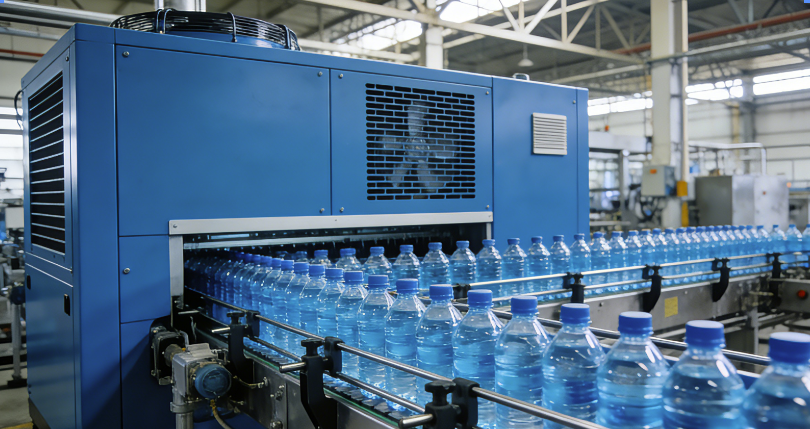
Packaging halls and bottling areas often experience:
When air compressors draw in humid air, water vapor becomes part of the compressed air stream. As pressure and temperature change, this vapor condenses, leading to moisture accumulation in pipelines and equipment.
If not addressed, moisture can affect valves, cylinders, and sensors used in packaging machines.
Understanding how air dryers work helps clarify their importance in packaging systems. Air dryers remove moisture from compressed air before it reaches downstream equipment.
In a refrigerated air dryer, compressed air is cooled using heat exchangers, causing moisture to condense. The condensed water is separated and drained, delivering dry compressed air back into the system.
This method provides stable drying performance without consuming purge air.
Packaging and bottling lines rely on compressed air for:
Poor compressed air quality can lead to inconsistent motion, increased maintenance, and reduced product quality. Moisture can also compromise hygiene standards in food and beverage bottling environments.
Maintaining clean and dry air supports stable machine operation and consistent production output.
For most packaging lines, refrigerated dryers offer better energy savings and lower long-term operating costs compared with a desiccant air dryer.
In bottling plants, frequent washdowns and liquid handling increase ambient humidity. Refrigerated air dryers perform well in these conditions by continuously removing moisture from the compressed air stream without relying on purge air.
This makes them suitable for packaging halls where humidity levels fluctuate throughout the day.
Packaging lines may operate in different modes:
Refrigerated air dryers are designed to handle both scenarios. Modern energy-efficient models adjust cooling capacity based on demand, helping control energy costs during partial load or idle periods.
This flexibility supports stable drying without interrupting production.
Selecting the right air dryer for your compressed air system requires accurate assessment of:
An undersized dryer may fail to remove moisture, while an oversized unit increases unnecessary energy use. Proper sizing ensures consistent air quality while maintaining cost effectiveness.
A refrigerated air dryer for packaging machines is typically installed downstream of air compressors and upstream of filters and distribution lines.
Correct integration ensures:
This setup is commonly used for compressed air for bottling line systems in food and beverage facilities.
Compared with desiccant systems, refrigerated air dryers:
These characteristics make them an energy efficient choice for packaging plants seeking long-term energy savings and controlled operating costs.
For most packaging and bottling applications, a refrigerated air dryer provides suitable moisture removal, stable operation, and good energy efficiency.
Moisture can affect pneumatic performance, increase maintenance needs, and compromise hygiene and product quality.
It cools compressed air using heat exchangers, causing water vapor to condense and be separated before the air enters the distribution system.
Desiccant air dryers are only needed when extremely low dew points are required. In most packaging environments, refrigerated dryers are sufficient.
Yes, as long as the dryer is correctly sized for the total compressed air flow rate and operating conditions.
Packaging and bottling lines place high demands on compressed air systems, especially in humid food and beverage environments. Choosing the right refrigerated air dryer helps remove moisture from compressed air, maintain consistent compressed air quality, and protect packaging machines from moisture-related issues. With stable performance, lower energy costs, and suitability for continuous or variable production schedules, refrigerated air dryers remain a practical and energy-efficient solution for a wide range of packaging and bottling applications.