Moisture is one of the most common and underestimated challenges in industrial pneumatic systems. Even well-designed air compressors introduce water vapor into the air stream, which later condenses inside pipelines, valves, and machines. This article explains how refrigerated air dryers solve typical moisture-related problems in industrial air systems, focusing on pipe water accumulation, pneumatic valve failures, and surface defects on finished products.
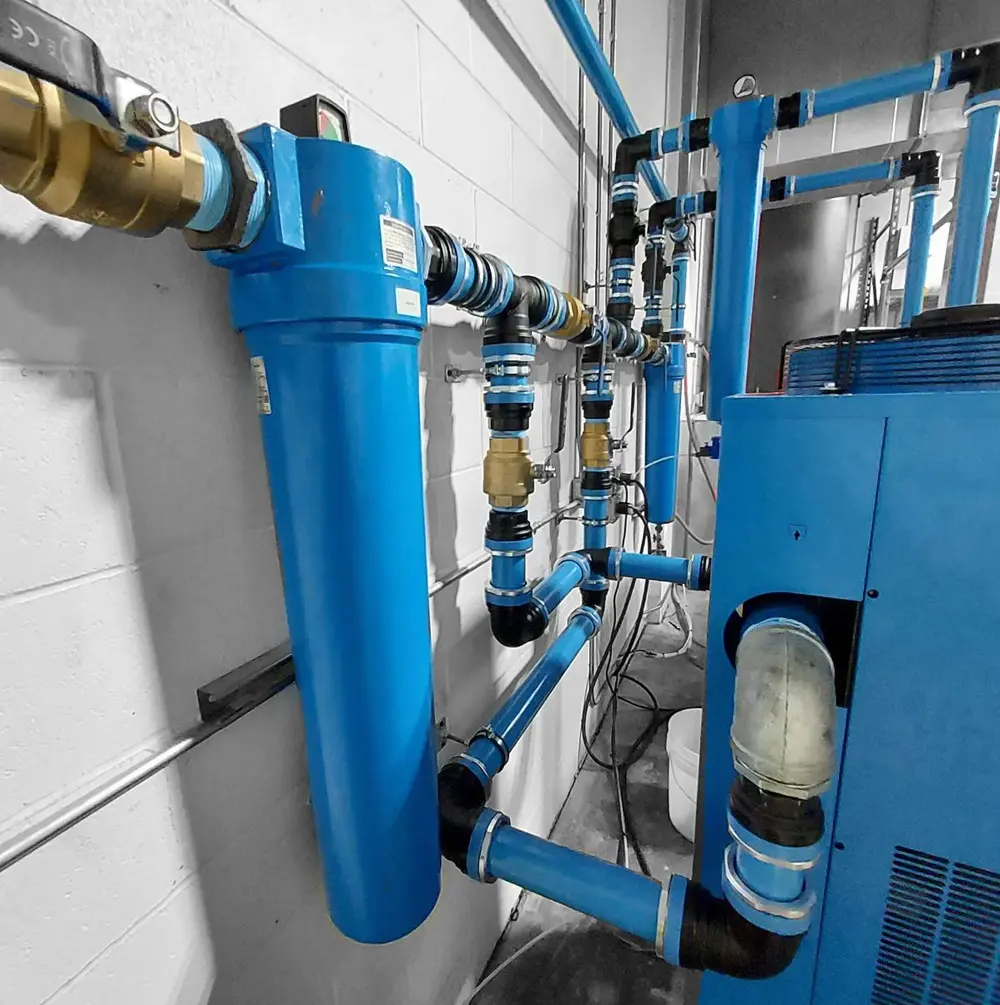
Ambient air always contains humidity. When air is compressed, the concentration of water vapor increases, leading to compressed air condensation once the air cools downstream.
Key causes of moisture in compressed air include:
Without proper drying, moisture in compressed air systems leads to corrosion, pressure loss, and unstable production.
Understanding how air dryers work helps clarify their value in industrial applications.
A refrigerated dryer removes moisture by cooling the compressed air until water vapor condenses and can be separated.
Basic process of drying compressed air:
This method is widely used because it is cost effective, stable, and suitable for most industrial air demands.
Without proper drying, liquid water collects in pipes, forming pools at low points. This causes:
Refrigerated air dryers reduce water content before the air enters the distribution network, preventing liquid formation under normal operating conditions.
Moisture in compressed air can cause:
This directly impacts the reliability of pneumatic systems.
By maintaining a consistent dew point, refrigerated air dryers help ensure dry air reaches valves and actuators, supporting smoother and more predictable operation.
In industries such as metalworking, painting, packaging, and electronics, moisture leads to:
These defects often originate from invisible moisture in compressed air.
A properly sized dryer delivers the correct type of air—clean and dry—reducing the risk of product surface defects and rework.
There are different types of compressed air dryers, each suited for specific applications.
| Type of Dryer | Typical Dew Point | Suitable For | Energy Efficiency |
|---|---|---|---|
| Refrigerated air dryers | +3°C | General industry | High |
| Cycling refrigerated dryers | +3°C | Variable loads | Higher |
| Desiccant dryers | -20°C to -40°C | Extremely dry air | Lower |
Applications such as pharmaceuticals, electronics, and some chemical processes may require extremely dry air, where desiccant dryers are more appropriate.
For most industrial uses, refrigerated dryers offer the best balance between performance and operating cost.
A cycling refrigerated dryer adjusts cooling capacity based on real-time air demand. Instead of running continuously, it cycles on and off as needed, which leads to:
This design supports higher energy efficiency compared to non-cycling units.
Even reliable equipment can experience issues if not correctly selected or maintained.
| Problem | Cause | Prevention |
|---|---|---|
| High outlet dew point | Undersized dryer | Correct sizing |
| Water carryover | Faulty drain | Regular drain inspection |
| Pressure drop | Clogged heat exchanger | Scheduled cleaning |
| Freezing in evaporator | Incorrect settings | Proper temperature control |
Regular maintenance and system monitoring help maintain stable drying performance.
Many industrial dryers are air cooled, using ambient air to remove heat from the refrigeration circuit.
Advantages of air-cooled dryers:
They are widely used in standard industrial environments where cooling water is unavailable or undesirable.
When designing a compressed air dryer system, consider:
Correct selection ensures stable air quality while keeping energy and maintenance costs under control.
They remove moisture by cooling the air so that water vapor condenses and can be separated before reaching downstream equipment.
Most refrigerated dryers deliver a pressure dew point around +3°C, suitable for general industrial applications.
Yes, when properly sized and maintained, they effectively manage moisture even in high humidity and high ambient temperatures.
Desiccant dryers are used when extremely dry air is required. Refrigerated dryers are more cost effective for most industrial uses.
Condensation occurs when warm, moisture-laden air cools inside pipes and equipment, allowing water vapor to turn into liquid.
Moisture-related problems such as pipeline water accumulation, pneumatic valve failures, and surface defects often originate from insufficient air drying. Refrigerated air dryers provide a practical and energy-efficient solution for removing moisture from compressed air across a wide range of industrial environments.
By understanding how different air dryers work, selecting the correct type of dryer, and maintaining stable dew point control, manufacturers can improve system reliability, protect equipment, and maintain consistent product quality—while keeping operating costs under control.