Correctly sizing a refrigerated air dryer is one of the most important steps in building a reliable compressed air system. An undersized dryer leads to moisture carryover and unstable air quality, while an oversized unit increases operating and investment costs unnecessarily.
This guide explains how to perform refrigerated air dryer sizing based on flow, pressure, temperature, and real operating conditions, with practical examples and common mistakes to avoid.
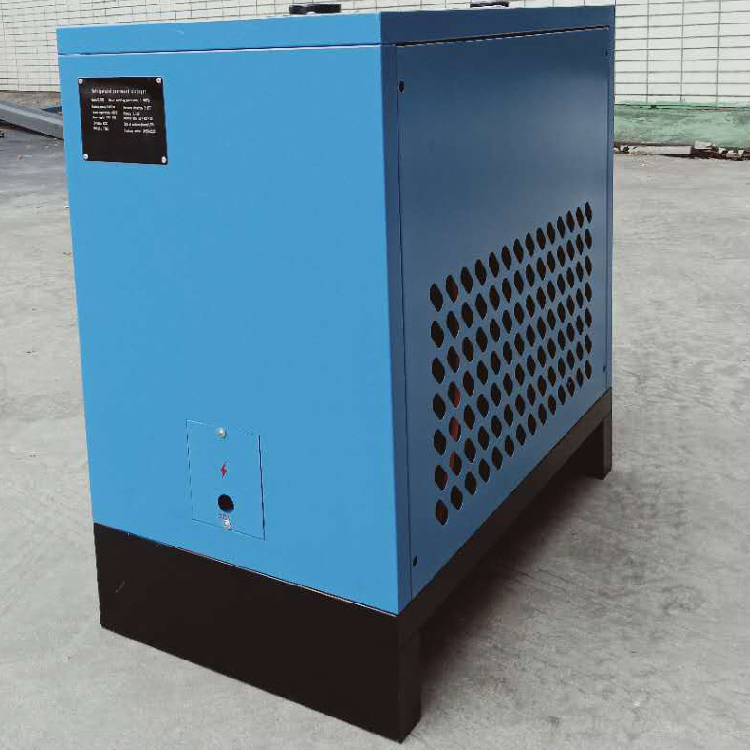
A properly sized dryer ensures that moisture from the compressed air is removed efficiently under all expected conditions. This supports:
This applies across industry applications, from manufacturing and automotive to food and beverages and electronics.
Standard cubic feet per minute (SCFM) refers to airflow at standard conditions, typically:
Manufacturers rate dryers using SCFM or Nm³/h based on these conditions.
Your dryer’s flow rating should match or exceed the maximum air demand of your compressed air system, including:
Tip: Always size based on peak demand, not average consumption.
The inlet air temperature is the compressed air temperature entering the dryer, typically coming from the air compressor or aftercooler.
Higher inlet temperatures increase the moisture load and reduce effective drying capacity.
Most refrigerant dryers are rated at:
If your system operates above this, apply correction factors or select a larger dryer.
Dryers are also rated at a specific pressure, often:
Lower pressure increases air volume and reduces dryer effectiveness.
If your system operates at lower pressure, you must compensate by selecting a dryer with a higher nominal capacity.
The ambient air temperature affects the refrigeration system’s ability to reject heat.
High ambient temperature reduces the dryer’s cooling efficiency and may result in:
For environments above 100°F (38°C), consult manufacturer correction charts.
The required pressure dew point PDP depends on your application:
| Application | Typical PDP |
|---|---|
| General manufacturing | +3°C |
| Food and beverages | +3°C or lower |
| Pharmaceuticals | 0°C to -20°C |
| Outdoor pipelines | 0°C or below |
Refrigerated air dryers commonly deliver +3°C PDP, which is suitable for most industrial uses.
The drying capacity of a dryer is its ability to remove water vapor from compressed air under specified conditions.
Moisture load depends on:
Accurate sizing ensures effective removal of water vapor under all operating conditions.
Best for:
Advantages:
Best for:
However, desiccant dryers and desiccant air dryers involve higher operating costs and more complex sizing due to purge air requirements.
Selecting based only on SCFM without considering inlet and ambient temperature leads to undersizing.
The air compressor’s nameplate capacity may not reflect real air consumption.
Failing to account for future machines results in early capacity shortages.
Dryer ratings use standard conditions, not site conditions. Always convert properly.
After applying temperature and pressure corrections, the required dryer size may be closer to 650–700 SCFM, not 500 SCFM.
This adjustment ensures stable air quality under real operating conditions.
In food and beverages, air quality and hygiene standards require stable moisture control.
Refrigerated air dryers are commonly used for:
Sizing must consider:
Determine peak airflow, inlet temperature, operating pressure, ambient temperature, and required dew point, then apply correction factors.
Ignoring temperature and pressure correction factors and relying only on nominal SCFM ratings.
Refrigerated dryers suit most industrial uses, but for ultra-low dew points, desiccant dryers are more appropriate.
Flow rating is based on standard conditions and must be adjusted for real operating conditions.
Yes. Higher inlet temperatures increase moisture load and reduce effective drying capacity.
Correct compressed air dryer sizing ensures stable air quality, efficient moisture removal, and long-term system reliability. By evaluating flow, pressure, inlet air temperature, ambient conditions, and pressure dew point requirements, users can select the right refrigerated air dryer for their application.
Avoiding common selection errors and understanding how real operating conditions differ from standard ratings will help achieve consistent drying performance while controlling energy and maintenance costs across a wide range of industrial environments.