A refrigerated air dryer is a device used in compressed air systems to remove moisture from compressed air. During compression, air temperature rises and water vapor becomes concentrated. When the air cools downstream, water condenses and forms liquid moisture that can damage equipment, reduce product quality, and increase maintenance needs.
Refrigerated air dryers work by cooling compressed air to separate condensed water, delivering dry air suitable for industrial applications. These systems are widely used in manufacturing, automotive plants, food and beverage facilities, and general industrial air treatment systems.
The air dryers working principle is based on cooling compressed air to lower its temperature below the pressure dew point. When compressed air is cooled, water vapor turns into condensed water and can be removed from the system.
The process typically includes:
By reducing the dew point, refrigerated dryers provide dry compressed air that protects downstream equipment and improves system reliability.
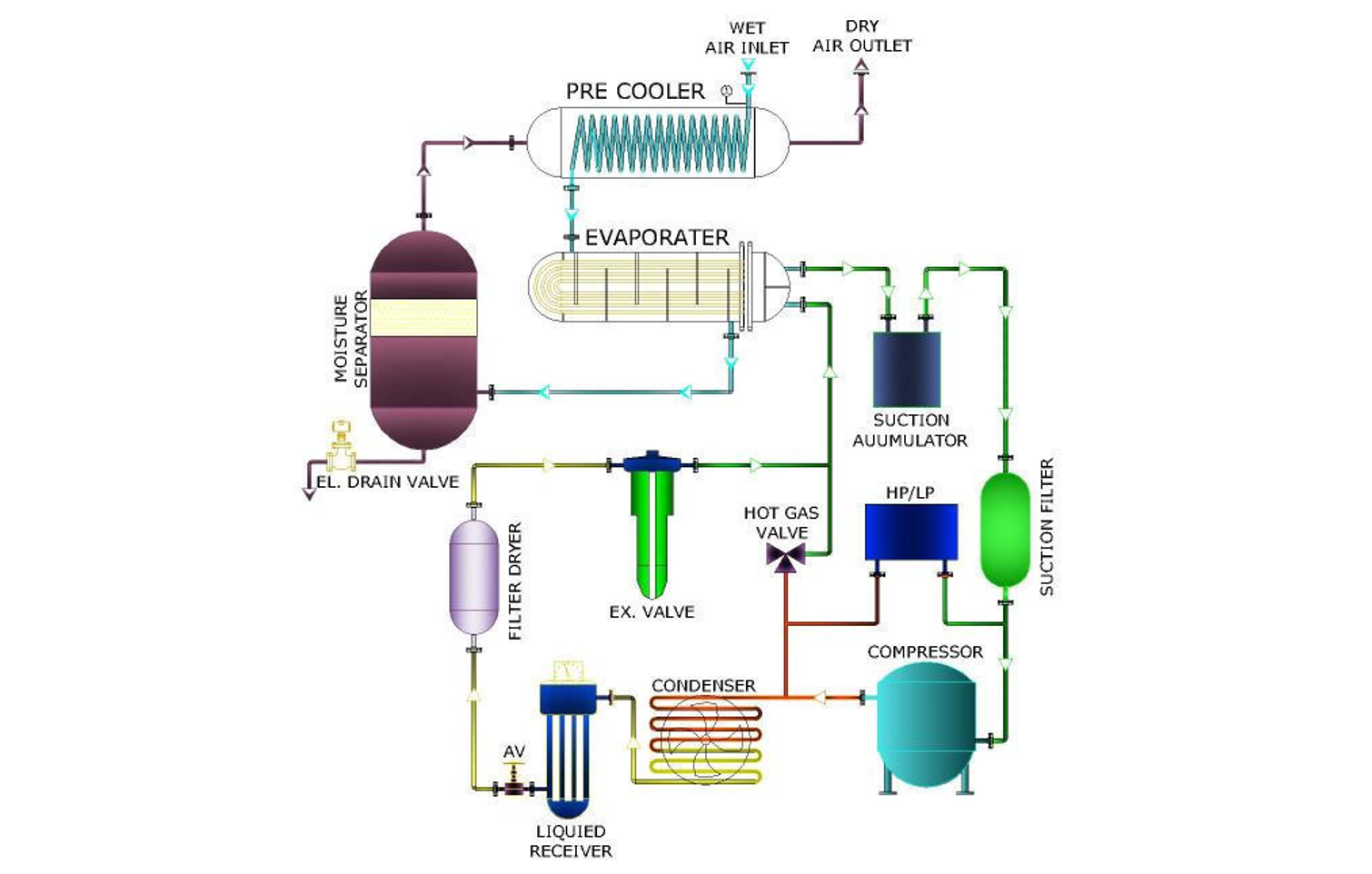
A typical refrigerated air dryer includes several core components:
These components work together to ensure consistent performance in compressed air dryers.
Refrigerated dryers are available in different designs to match specific operating conditions:
Operate continuously at full refrigeration capacity. Suitable for steady compressed air demand.
Adjust refrigeration capacity based on load. Cycling refrigerated units reduce energy consumption and operating costs.
Use variable-speed refrigeration compressors for precise control and improved energy efficiency.
Each type offers different performance levels and cost profiles depending on system load and environmental conditions.
Refrigerated vs desiccant dryer selection depends on dew point requirements and application conditions.
For general industrial compressed air systems, refrigerated dryers offer a balanced solution between performance and cost.
Refrigerated air dryers are widely used across industries where dry compressed air is required:
Selecting the right air dryer requires evaluating several factors:
For variable loads, cycling refrigerated dryers can reduce energy consumption. For continuous operations, non-cycling models provide stable performance.
Most refrigerated dryers achieve a pressure dew point between +3°C and +10°C, suitable for general industrial compressed air systems.
Dry air prevents corrosion, protects pneumatic tools, and improves product quality by reducing moisture contamination.
The heat exchanger transfers heat from compressed air to the refrigerant, cooling the air and allowing moisture to condense and be removed.
Cycling refrigerated dryers adjust cooling capacity based on air demand, while non-cycling units run continuously at full load.
Refrigerated dryers are suitable for most industrial applications but cannot reach the very low dew points provided by desiccant dryers.
Refrigerated air dryers are a practical solution for removing moisture from compressed air. By cooling compressed air, separating condensed water, and delivering dry air at a controlled dew point, they improve reliability in compressed air systems. With lower operating costs and straightforward maintenance, refrigerated dryers are widely used across industrial applications as part of a complete air treatment system.