In modern compressed air systems, controlling moisture is essential for stable performance and reliable air supply. After an air compressor generates compressed air, it naturally contains water vapor that must be removed. This is where types of compressed air dryers become important.
Two widely used technologies are refrigerated air dryers and desiccant air dryers. Both are designed for removing moisture, but they work in different ways and serve different dew point requirements.
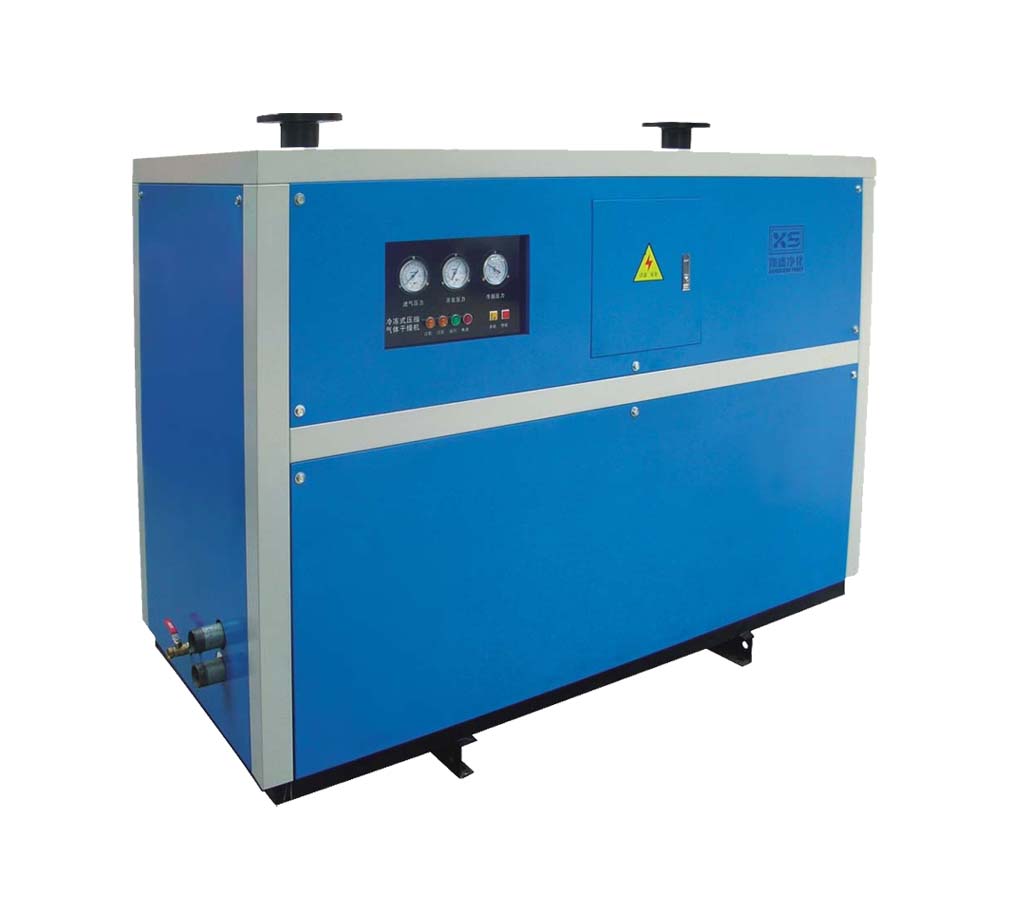
Understanding how air dryers work helps explain their differences.
Compressed air leaving the compressor is hot and humid. The drying process typically involves:
· Air entering a drying chamber or tower
· Moisture being removed from the air stream
· Either cooling or adsorption process applied
· Delivery of dry compressed air for use
The goal is to ensure stable air quality and protect downstream equipment.
A refrigerated air dryer (sometimes called a refrigerant dryer) removes moisture by cooling compressed air.
· The air stream passes through a heat exchanger
· Air is cooled to a low temperature
· Water vapor condenses into liquid
· Condensate is drained out of the system
This process dries the air efficiently for general industrial use.
· Stable dew point suitable for standard applications
· Lower maintenance costs
· Energy-efficient operation
· Ideal for general compressed air systems
Refrigerated dryers are commonly used where moderate dryness is acceptable.
A desiccant air dryer removes moisture using desiccant material, such as activated alumina or molecular sieves. These materials absorb moisture from compressed air.
1. Moist air enters a desiccant tower
2. Moisture is absorbed by the desiccant
3. One tower dries the air while the other regenerates
4. Regeneration uses purge air or heat
5. Continuous cycle ensures stable output
This system produces ultra dry air suitable for sensitive applications.
· Use cooling to remove moisture
· Suitable for standard industrial environments
· Moderate dew point performance
· Lower operating cost
· Use adsorption with desiccant material
· Can achieve much lower dew points
· Suitable for sensitive or high-precision applications
· Higher energy use due to regeneration cycle
Different industries have different dew point requirements:
· Refrigerated dryers: moderate dew point levels
· Desiccant dryers: extremely low dew point levels
When applications require ultra dry air, adsorption systems are preferred.
In adsorption systems, moisture removal depends on cycling:
· One tower removes moisture from the air supply
· The other tower regenerates
· Regeneration uses purge air to remove absorbed moisture
This alternating process ensures continuous drying performance.
When choosing the right air dryer, consider:
· Required air quality
· Moisture sensitivity of equipment
· Type of industrial application
· Energy efficiency expectations
· Air compressor system capacity
· Environmental conditions
If the application needs standard dry air, refrigerated systems are suitable. If extremely low moisture is required, desiccant systems are more appropriate.
· Lower maintenance costs
· Fewer components
· Simple operation
· Require periodic replacement of desiccant material
· More complex system structure
· Higher operational cost but better dryness performance
· General manufacturing
· Workshops
· Standard compressed air systems
· Electronics manufacturing
· Pharmaceutical production
· Laser cutting
· Applications requiring ultra dry air
Air dryers remove moisture from compressed air produced by an air compressor to ensure clean and dry air supply.
They remove moisture by cooling air (refrigerated dryers) or absorbing moisture using desiccant material (adsorption dryers).
Refrigerated dryers cool air to remove water vapor, while desiccant dryers use adsorption to achieve much lower dew points.
Purge air is used to regenerate the desiccant by removing absorbed moisture so the system can continue drying air.
They are used when applications require ultra dry air or very low dew point levels.
Both refrigerated air dryers and desiccant air dryers are essential solutions in modern compressed air systems. Refrigerated systems provide cost-effective drying for general use, while desiccant systems deliver ultra dry air for demanding applications.