A reliable compressed air system needs more than an efficient air compressor. Moisture inside compressed air can reduce air quality, damage equipment, and affect production performance. Choosing the right compressed air dryer helps remove moisture, maintain stable pressure dew point, and deliver quality air for industrial applications.
With many dryer technologies available, selecting the right compressed air dryer requires understanding your application requirements, operating conditions, airflow demand, and energy goals.
The best dryer choice can improve energy efficient operation, reduce energy consumption, and support long-term performance of industrial air systems.
When an air compressor draws in ambient air, it also takes in moisture from the environment. During compression, water vapor becomes concentrated inside the compressed air system.
As compressed air cools, moisture can condense and cause:
· Corrosion inside pipelines
· Damage to pneumatic tools
· Reduced equipment reliability
· Product contamination
· Higher maintenance costs
A compressed air dryer removes moisture before the air reaches production equipment, helping maintain consistent air quality.
A compressed air dryer is an air treatment device designed to remove water vapor from compressed air.
The main goal is to produce dry, stable air with the required pressure dew point.
Different industries require different levels of dryness:
· General manufacturing may use a refrigerated air dryer
· Precision applications may require a desiccant dryer
· Sensitive industries may need extremely low dew points
Choosing the correct dryer type depends on the application and required air quality.
A refrigerated air dryer is the most common solution for industrial compressed air systems.
It works by cooling compressed air to reduce moisture. As the air temperature decreases, water vapor condenses into liquid water, which is separated and drained.
· Energy efficient operation
· Lower maintenance requirements
· Reliable performance
· Suitable for most industrial applications
They are widely used with:
· Factory air systems
· Pneumatic tools
· General manufacturing equipment
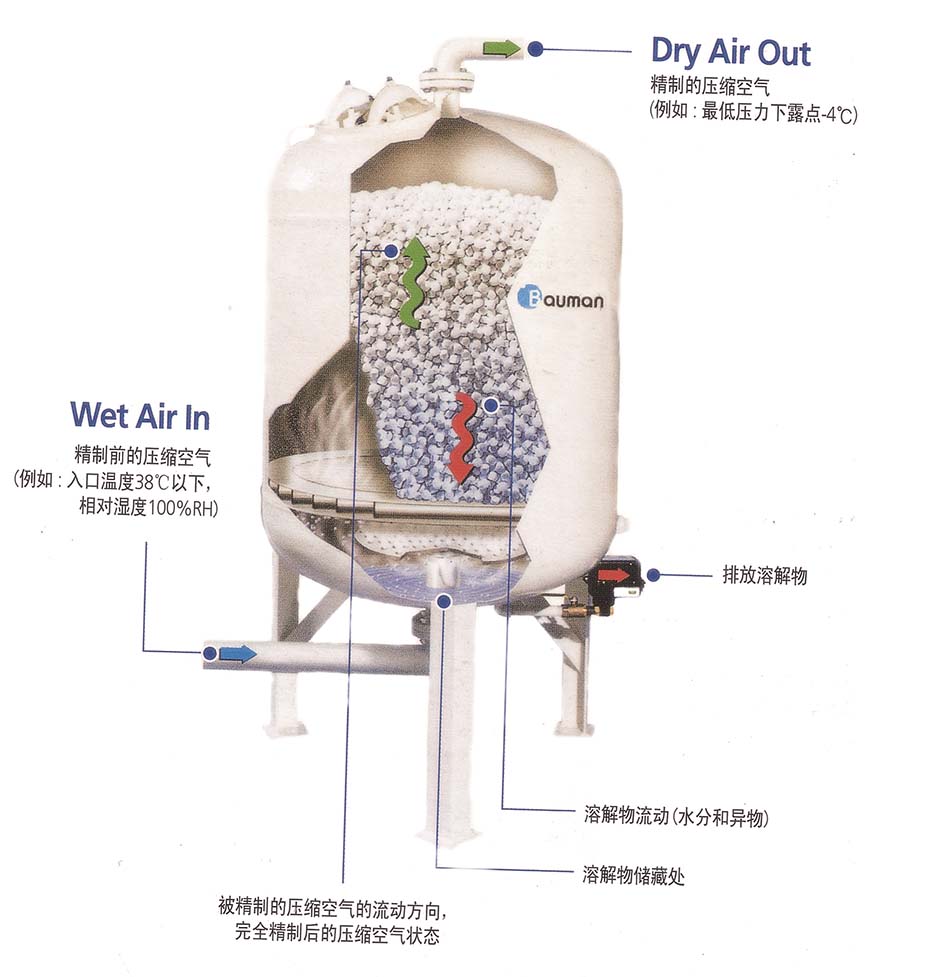
A desiccant dryer removes moisture through adsorption.
The dryer uses materials such as:
· Activated alumina
· Molecular sieves
· Silica gel
Desiccant dryers can achieve a much lower pressure dew point than refrigerated models.
They are suitable for:
· Pharmaceutical production
· Electronics manufacturing
· Food processing
· Applications requiring extremely dry air
| Feature | Refrigerated Air Dryer | Desiccant Air Dryer |
| Moisture removal | Cooling and condensation | Adsorption |
| Pressure dew point | Standard | Very low |
| Energy consumption | Lower | Higher |
| Maintenance | Simple | More maintenance |
| Best application | General industry | Ultra-dry air requirements |
The first step in selecting the right compressed air dryer is determining the required pressure dew point.
Pressure dew point indicates the temperature at which moisture begins to condense from compressed air.
A lower dew point means:
· Less moisture
· Higher air dryness
· Better protection for sensitive equipment
For general applications, a refrigerated air dryer is often sufficient. For demanding environments, a desiccant dryer may be required.
Compressed air dryer performance depends on actual operating conditions.
Important factors include:
· Ambient temperature
· Inlet air temperature
· Working pressure
· Airflow rate
· Installation environment
For example, a dryer operating in a hot factory environment may require a higher capacity model.
A properly sized dryer ensures efficient operation.
An undersized dryer may cause:
· Poor moisture removal
· Higher pressure drop
· Reduced air quality
An oversized dryer may result in:
· Higher purchase costs
· Unnecessary energy use
When selecting capacity, consider:
· Compressor output
· Maximum airflow demand
· Operating pressure
· Future expansion plans
Ambient temperature affects dryer performance.
In hot environments:
· Cooling efficiency may decrease
· Refrigeration systems may require higher capacity
In a cold climate:
· Drain systems may require protection
· Moisture freezing risks should be considered
Selecting equipment suitable for local temperature conditions improves reliability.
Energy costs are a major part of compressed air system operation.
An energy efficient dryer helps reduce operating expenses through:
· Lower power consumption
· Optimized cooling performance
· Reduced pressure losses
· Smart control systems
A highly efficient air treatment solution can provide long-term savings.
A high-quality dryer supports the entire compressed air system by providing:
Removing moisture improves air quality and protects downstream equipment.
Dry air reduces corrosion and contamination in:
· Pneumatic tools
· Valves
· Cylinders
· Production equipment
Cleaner compressed air reduces:
· Equipment failures
· Repair frequency
· Replacement costs
Modern air treatment systems focus on reducing energy consumption while maintaining performance.
Energy-saving features include:
· Variable speed refrigeration compressors
· Smart controllers
· Efficient heat exchangers
· Low pressure drop designs
A well-designed system balances:
· Required dryness
· Equipment cost
· Energy consumption
· Operating environment
Compressor capacity alone does not determine dryer requirements.
You should also consider:
· Ambient temperature
· Required pressure dew point
· Application conditions
A refrigerated dryer may not provide enough dryness for applications requiring extremely low moisture levels.
A desiccant dryer may increase energy costs if used where standard drying is enough.
Compressed air demand may increase as production expands.
Selecting a dryer with suitable capacity planning improves long-term reliability.
Compressed air dryers are used across many industries, including:
· Automotive manufacturing
· Food and beverage production
· Electronics
· Pharmaceuticals
· Chemical processing
· Textile production
· General industrial applications
Any industry that relies on compressed air benefits from stable, dry air supply.
The best dryer depends on application requirements. Refrigerated air dryers are suitable for most industrial systems, while desiccant dryers are preferred when very low pressure dew points are required.
A refrigerated air dryer cools compressed air, removes condensed moisture, and delivers cleaner, drier air to downstream equipment.
Choose a dryer based on compressor airflow, operating pressure, inlet temperature, ambient temperature, and required pressure dew point.
Yes. Energy efficient dryers can reduce energy consumption and operating costs while maintaining reliable compressed air performance.
Yes, but the dryer should be selected according to cold climate conditions, including freezing risks and temperature protection requirements.
Choosing the best compressed air dryer requires careful consideration of air quality requirements, pressure dew point, operating conditions, and energy goals.
A properly selected refrigerated air dryer provides reliable moisture removal for most industrial applications, while desiccant dryers offer ultra-dry air for specialized processes.
By selecting a properly sized and energy efficient dryer, businesses can improve compressed air system performance, reduce energy costs, and maintain a consistent supply of high-quality compressed air.