Modern industrial compressed air systems depend on high-quality compressed air to support production, automation, and product quality. In many industrial applications, moisture in compressed air can lead to corrosion, equipment wear, and product defects. An adsorption air dryer, also known as a desiccant air dryer, is designed to produce clean dry air by removing water vapor through an adsorption process.
This guide explains the working principle of adsorption air dryers, their main components, and why they are widely used across the compressed air industry.
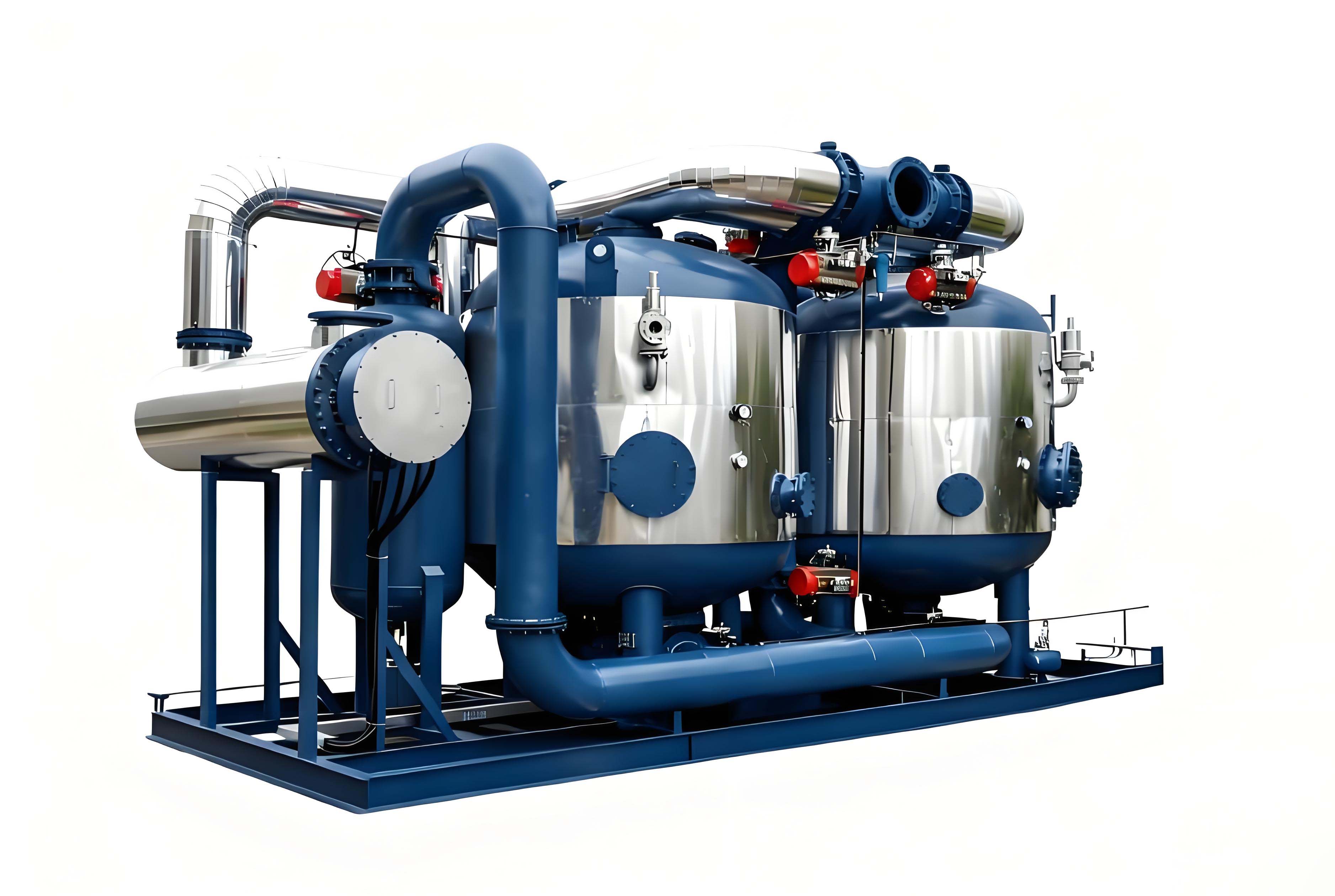
An adsorption air dryer is a type of compressed air dryer that uses solid desiccant materials to remove moisture from pressurized air. Unlike refrigerated dryers that cool the air, adsorption dryers trap water vapor on the surface of a desiccant.
The result is dry compressed air with a very low dew point, making these dryers suitable for applications that require higher air quality than refrigerated dryers can provide.
The working principle is based on adsorption rather than cooling.
As pressurized air enters the dryer:
1. Moist compressed air flows into a drying tower.
2. The air passes through a bed of desiccant.
3. The desiccant captures water vapor while allowing dry air to pass.
4. Clean dry compressed air leaves the dryer and enters the distribution system.
Most adsorption dryers use two towers.
· One tower dries the air.
· The other tower regenerates the desiccant.
The towers switch automatically to provide a continuous supply of reliable air.
The performance of an adsorption dryer depends on the desiccant material.
Common materials include:
Activated alumina offers:
· High moisture adsorption capacity
· Good mechanical strength
· Long service life
· Reliable performance under varying operating conditions
It is one of the most widely used desiccants in industrial compressed air systems.
Molecular sieves have uniform pore sizes that selectively adsorb water molecules.
Advantages include:
· Extremely low pressure dew points
· Stable performance
· High adsorption efficiency
· Suitable for demanding industrial processes
They are commonly selected for applications requiring very dry compressed air.
Moisture inside air compressor systems can cause:
· Corrosion in pipelines
· Rust in pneumatic equipment
· Frozen valves in cold environments
· Product contamination
· Increased maintenance
Producing dry compressed air helps improve equipment reliability and maintain consistent production quality.
Several adsorption dryer technologies are available.
These dryers regenerate the desiccant using a portion of dry compressed air.
Advantages:
· Simple structure
· Reliable operation
· Suitable for many industrial applications
External heaters reduce compressed air consumption during regeneration.
Benefits include:
· Lower purge air usage
· Improved energy efficiency
· Reduced operating costs
Blower-heated systems use ambient air for regeneration.
These systems are often selected for large industrial compressed air systems where energy savings are important.
Adsorption dryers are used in a wide range of industries.
Common industrial applications include:
· Pharmaceutical manufacturing
· Electronics production
· Medical equipment
· Chemical processing
· Semiconductor manufacturing
· Automotive production
· Food and beverage processing
Many of these industries rely on compressed air with extremely low moisture levels to maintain product quality and production stability.
Modern industrial air compressor installations usually include:
· Air compressor
· Air receiver tank
· Pre-filter
· Adsorption air dryer
· After-filter
· Distribution piping
This complete configuration improves air quality throughout the production process.
Compared with standard refrigerated dryers, adsorption dryers offer:
· Lower pressure dew points
· Reliable air quality
· Suitable for sensitive industrial processes
· Consistent operation under varying environmental conditions
· Long equipment life
These advantages make them a preferred solution for applications requiring very dry compressed air.
Modern adsorption dryers are designed to be highly efficient.
Energy-saving features may include:
· Optimized regeneration cycles
· Low purge air consumption
· Intelligent controller systems
· Efficient airflow management
Selecting the correct dryer size and regeneration method helps reduce operating costs while maintaining performance.
When choosing a dryer, consider:
Determine how dry the compressed air must be.
The dryer should match the airflow of the industrial air compressor.
Pressure affects adsorption efficiency and dryer performance.
Industries such as food and beverage, pharmaceuticals, and electronics often require lower moisture levels than general manufacturing.
Consider:
· Desiccant replacement interval
· Valve maintenance
· Controller functions
· Energy consumption
An adsorption air dryer removes moisture by passing compressed air through desiccant material that adsorbs water vapor while allowing dry air to flow through.
The most common desiccant materials are activated alumina and molecular sieves because of their high moisture adsorption capacity and long service life.
Dry compressed air helps prevent corrosion, protects equipment, improves air quality, and supports reliable industrial production.
Adsorption air dryers are widely used in pharmaceuticals, electronics, chemical processing, automotive manufacturing, and food and beverage industries.
A refrigerated dryer removes moisture by cooling compressed air, while an adsorption dryer uses desiccant material to adsorb water vapor and achieve much lower pressure dew points.
Understanding the working principle of an adsorption air dryer helps users choose the right solution for their air compressor systems. By using high-performance desiccants such as activated alumina and molecular sieves, these dryers produce clean dry compressed air for a wide range of industrial applications.
Whether used in general manufacturing or industries with strict air quality requirements, adsorption air dryers provide reliable air, support efficient industrial processes, and help maintain stable performance throughout industrial compressed air systems.